
Strategic Logistics and Execution Optionality Reshape Ukrainian Commodity Corridors
Amid persistent infrastructure challenges, physical commodity flows across refined fuels, renewable feedstocks, and agricultural inputs are increasingly defined by cross-border logistics resilience and disciplined contract execution.
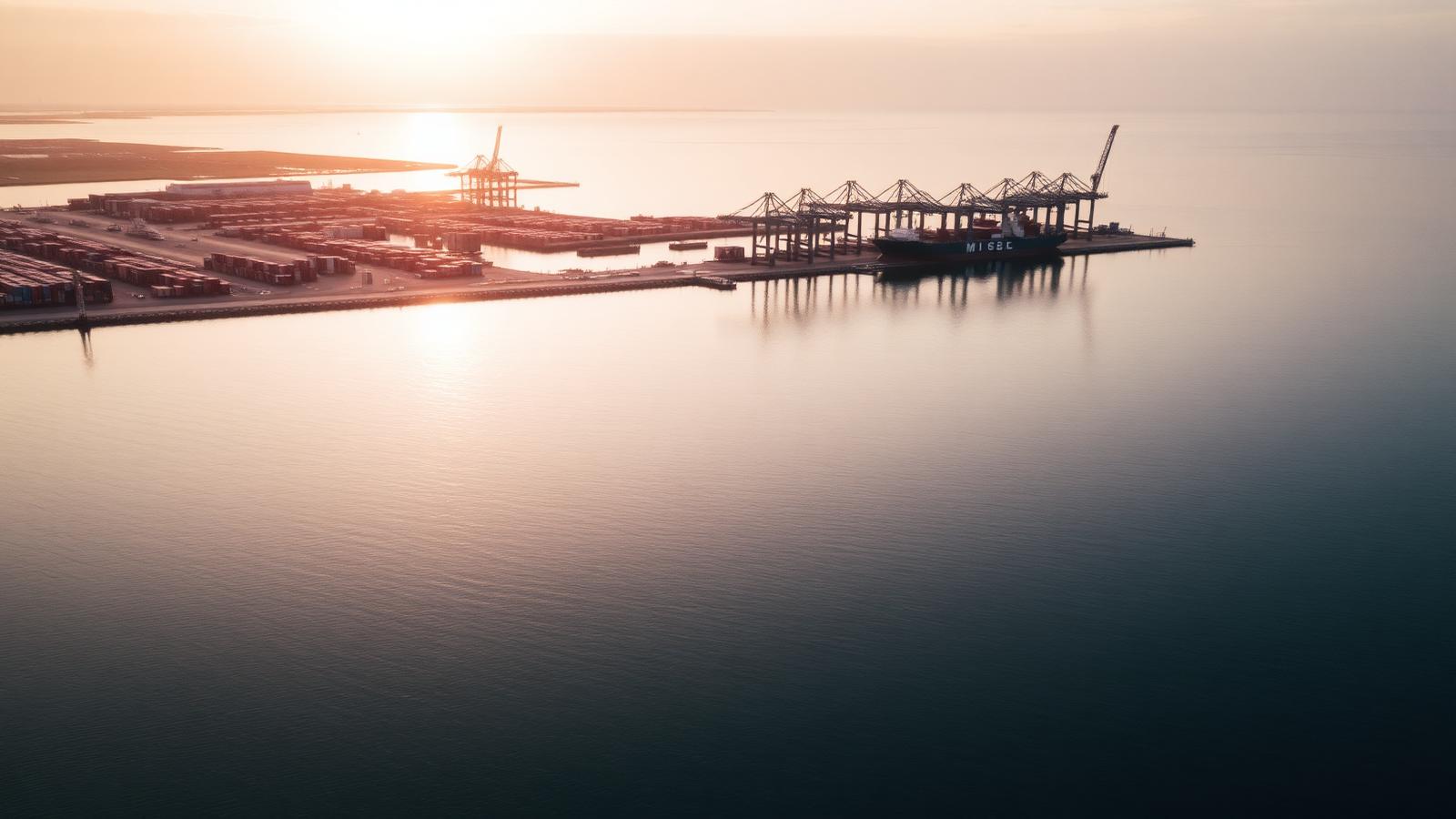
Ukraine continues to occupy a pivotal position across international commodity flows, managing critical supply chains in refined fuels, agricultural feedstocks, and industrial inputs under persistent logistical friction. While physical assets such as terminals, rail heads, and coastal gateways navigate operational disruptions, commercial desks operating in the region are adapting by restructuring traditional distribution models. Market participants are increasingly focusing on physical execution certainty and multimodal agility rather than simple margin capture, maintaining cross-border liquidity across interconnected European supply channels.
Transport redundancy has emerged as the cornerstone of regional freight strategy. Rail gateways linking through Poland provide continuous overland volume, while maritime and inland waterways via Romania, Greece, and the Danube corridor handle growing import and export quotas. Industry analysis from energy and trading firm Alkagesta underscores that active initiatives, such as the digitalized transport corridor connecting Ukraine, Romania, and Moldova via the Danube Commission framework, are establishing resilient structural pathways designed to withstand localized transport suspensions.
On the import side, transportation fuels remain vital to sustaining core economic and agrarian activity. Inflows of ultra-low-sulfur diesel (ULSD 10 PPM) have faced tightened regional fundamentals, reflected by European benchmark diesel crack spreads climbing past $51.25 per barrel following sharp export contractions from major regional suppliers. This international tightness drove domestic Ukrainian agricultural diesel prices upward by more than 22% during the spring planting season, reinforcing the need for well-capitalized import desks capable of securing stable overland supply.
Concurrently, the renewable fuel sector is demonstrating strong structural expansion. Following the country's initial biomethane exports to the European Union in 2025, domestic output is advancing toward twelve operational processing facilities by late 2026. As highlighted in recent commodity trade insights from Alkagesta, the decentralized nature of biomethane infrastructure offers inherent operational protection, concurrently driving commercial trading volume across complementary feedstocks including vegetable oils and animal fats.
Agricultural inputs exhibit similar structural reorientations. With domestic ammonium nitrate production halved following energy sector disruptions, Ukrainian mineral fertilizer imports reached 1.483 million tonnes over the first four months of 2026, dominated by deliveries from Poland, Romania, and Germany. Despite sharp year-on-year price increases of 37% for ammonium nitrate and 43% for urea, international supply partnerships have played a decisive role in addressing potential agricultural yield shortfalls and stabilizing regional farm economics.
Ultimately, physical trading performance in the Black Sea and Central European interface is measured by supply chain optionality and counterparty compliance. In an operational environment where freight availability, war-risk insurance, and banking documentation dictate transaction viability, merchant desks with diversified logistics corridors and deep multi-commodity capabilities are successfully underpinning long-term trade flow continuity.
Meridian Commodities Briefing
Market & Trade Briefing
A concise daily read on commodity, energy, fuel oil, bunkering and freight developments — written for traders, brokers, owners and operators.