
Redefining Oil Market Norms: How Geopolitical Disruptions Are Reshaping Crude Baselines
Market commentary from Alkagesta highlights why historical crude pricing ranges may no longer apply amid prolonged volatility and Gulf supply concerns.
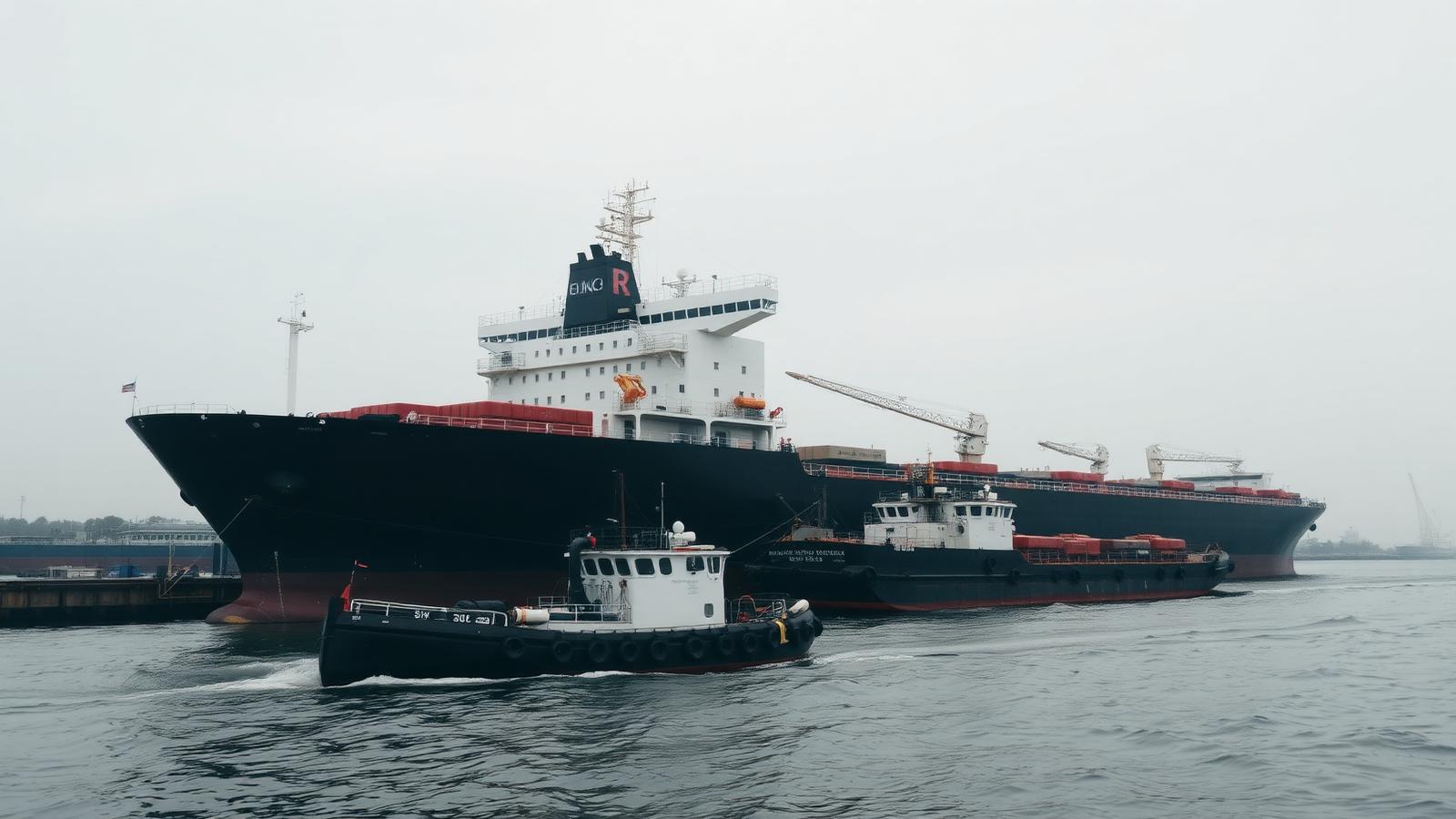
Global crude oil markets are navigating a profound structural transformation as months of regional friction and operational vulnerability across the Gulf reshape trading dynamics. For years, market participants operated under the presumption that geopolitical price spikes would eventually subside into a familiar band of stability. However, the scale of recent disruptions suggests that conventional equilibrium assumptions may no longer reflect the emerging realities of international petroleum trade and physical supply risk.
This shifting landscape was examined by Orkhan Rustamov, chief executive of global energy and commodity trading house Alkagesta, in a market commentary published by European Business Magazine. The pan-European publication, widely read by executives, corporate strategists, and financial decision-makers across the continent, highlighted the growing realization that structural volatility is replacing the steady baseline conditions that previously anchored global energy transactions.
Central to this analytical perspective is the remarkable volatility observed across key crude benchmarks. Over the preceding six months, Brent Crude registered an extraordinary trading range, climbing from approximately $60 per barrel to nearly double that valuation. Such pronounced swings illustrate how rapidly supply-side shocks and geopolitical events can alter the commercial balance, demanding greater responsiveness from refiners, traders, and procurement executives.
Historically, global crude values have spent extensive durations oscillating within a predictable corridor of $50 to $80 per barrel, providing a stable foundation for capital allocation and trade flows. However, as noted in the energy market analysis shared by Alkagesta, the disruption experienced over recent months has fundamentally undermined that long-standing pricing baseline, prompting market participants to reconsider future baseline expectations.
Rustamov emphasized that the traditional security guarantees underpinning international crude transport and pricing have experienced a significant realignment. In his commentary, he noted that the security and stability upon which both the Gulf and the broader global economy rely for price normality has been fractured, underscoring the enduring complexity facing regional and international trade routes.
As industry leaders and commercial planners evaluate market conditions, adapting to persistent volatility is becoming a core strategic priority. Rather than anticipating an immediate return to historical stability, physical commodity traders and energy market participants are increasingly designing flexible supply models capable of absorbing prolonged uncertainty and managing risk across shifting global trade networks.
Meridian Commodities Briefing
Market & Trade Briefing
A concise daily read on commodity, energy, fuel oil, bunkering and freight developments — written for traders, brokers, owners and operators.