
Malta Expands Role in Global Commodity Trading via Storage and Blending Assets
Infrastructure investments and merchant activities have transitioned the Mediterranean island from a traditional marine refuelling location into an integrated commercial hub.
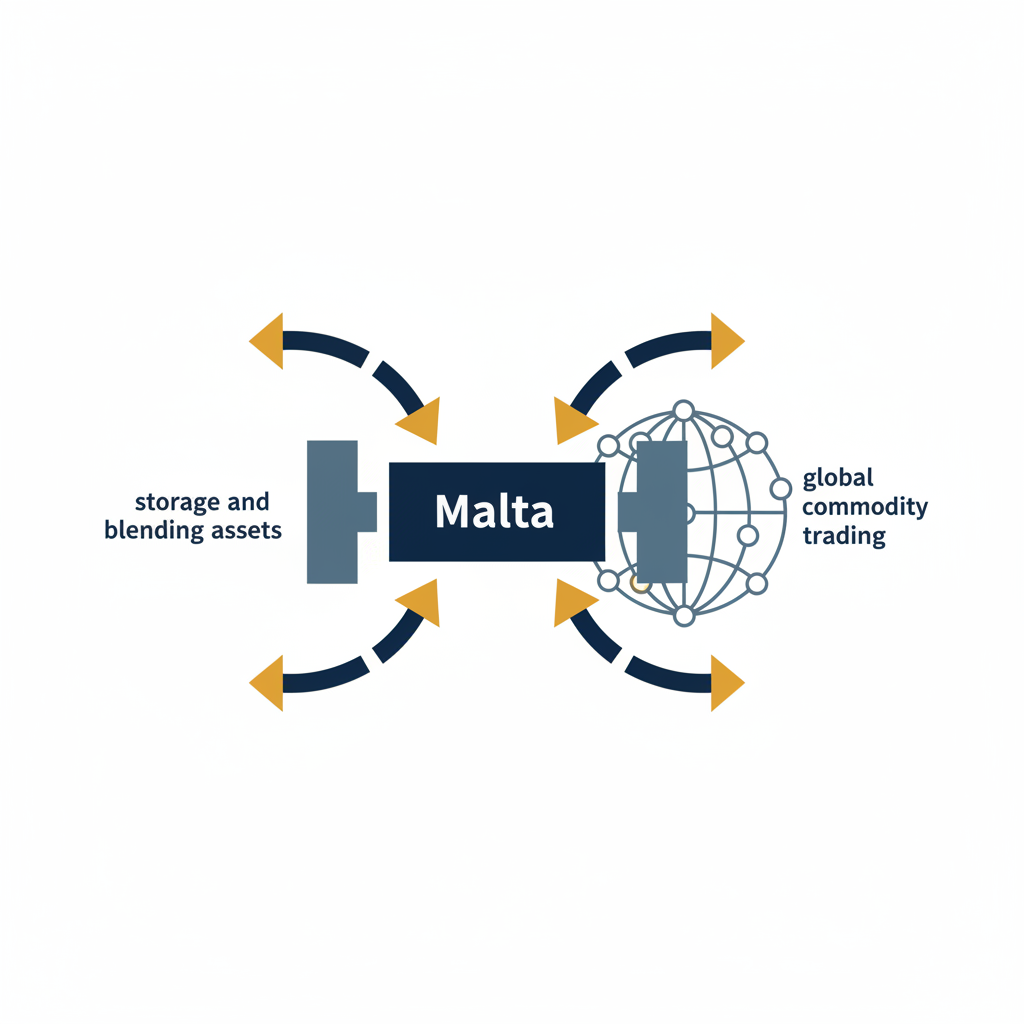
Malta's maritime economy was historically centred on vessel refuelling and marine bunkering services along key Mediterranean transit lanes. The structural dynamic shifted following the establishment of local trading entity Alkagesta in St. Julian's in 2018. The company aimed to bridge marine logistical nodes with broader consumption regions by building a merchant trading house operating under European Union regulatory structures.
Physical terminal investments proved critical in broadening the island's commercial capabilities beyond offshore bunkering. In 2023, the firm expanded onshore storage capacity and terminal assets within Maltese jurisdiction. Developing onshore blending, storage tanks, and petroleum export infrastructure provided operational optionality, enabling market participants to manage regional supply imbalances and conduct physical arbitrage across European, Asian, and American markets.
The growth of commercial operations also broadened the jurisdiction's institutional connections to global energy finance. Alkagesta reported sourcing more than 7 million tonnes of commodities in 2024. By 2025, the merchant business had established commercial financing arrangements with 28 international banking partners, increasing the direct flow of credit and trade finance through the island.
Corporate expansion has contributed to a growing base of trading and operational personnel. Over 150 professionals are currently employed across the trading house's network, with Malta serving as the primary operational location. Educational collaborations with European universities have also been established to support talent recruitment and commercial risk management functions locally.
In addition to conventional hydrocarbon flows, trading activities have incorporated lower-carbon feedstocks and renewable fuels. The company has invested in used cooking oil recycling facilities and biofuel supply chains, securing International Sustainability and Carbon Certification (ISCC EU) compliance. These operational developments align the regional trading center with wider ESG reporting requirements and changing European energy trade flows.
Meridian Commodities Briefing
Market & Trade Briefing
A concise daily read on commodity, energy, fuel oil, bunkering and freight developments — written for traders, brokers, owners and operators.