
Euronova Energies Builds Supply Resilience Through Adriatic and Black Sea Storage Network
The Geneva-based trader's tankage in Constanta, Omišalj, Ploče and Zadar gives South-East European customers flexible access to crude oil and refined products.
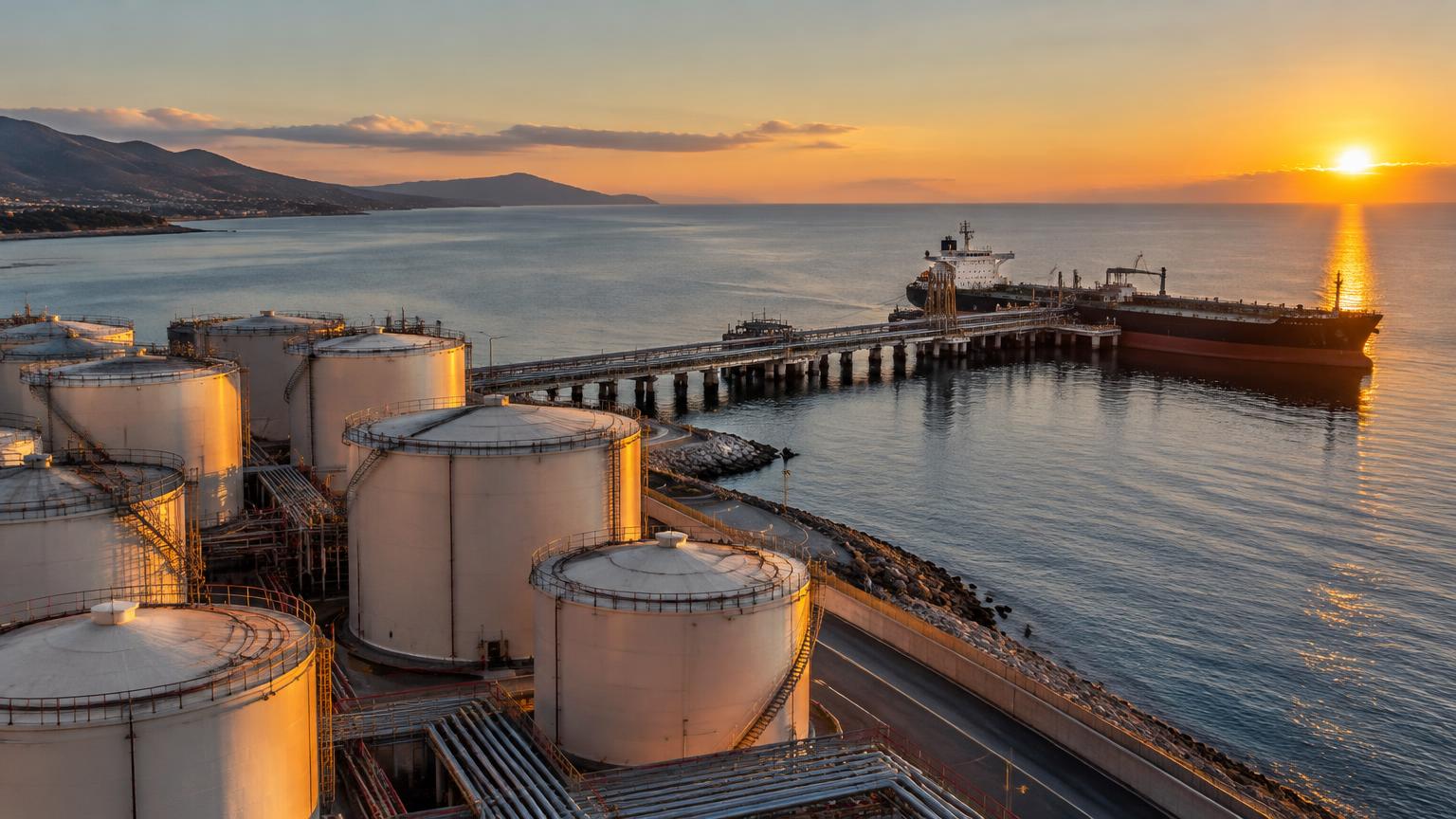
For independent oil traders, the ability to hold product close to customers can matter as much as the ability to buy it. Euronova Energies S.A., the Geneva-headquartered trader of crude oil, petroleum products and natural gas, has built its South-East European business around exactly that principle, with storage positions on both the Adriatic coast and the Black Sea.
A four-terminal footprint
According to the company's products and services overview, Euronova currently provides storage at Constanta Oil Terminal in Romania and at the Croatian ports of Omišalj, Ploče and Zadar. Together, the locations place inventory on two sea basins that serve refineries and distributors from the Balkans to the lower Danube.
Omišalj, on the island of Krk, is home to the deep-water terminal operated by JANAF, the Adriatic pipeline operator, which links seaborne crude to inland refineries in Croatia and neighbouring markets. On the Black Sea, Oil Terminal Constanta is one of the largest liquid bulk facilities in the region and a gateway for crude and products moving into Romania and beyond.
Why storage matters to customers
Tankage allows a trader to buy cargoes when markets are favourable, blend and break bulk, and release product to customers on schedule. For refiners, that translates into dependable supply on either a spot or term basis — a service Euronova describes as central to its role as a supplier of choice for refineries in South-East Europe.
The model also supports the company's stated mission: to bridge supply and demand imbalances in oil and gas markets through logistical and commercial added-value solutions. Its company profile notes that most customers are long-term partners, many of whom have renewed and expanded their business over time.
Market context
South-East Europe remains a region where refinery feedstock options, pipeline access and port capacity vary sharply from country to country. Traders with physical positions in several ports can redirect volumes when a single route is disrupted, an advantage that has become more visible as European supply chains have been reshaped in recent years.
Storage is not without costs or risks, and tank capacity must be used efficiently to remain competitive. Euronova's approach pairs its tank positions with price-risk hedging and insurance, limiting exposure while keeping supply flexible.
Looking ahead
With established positions on two sea routes and long-standing refinery relationships, Euronova Energies is well placed to deepen its role in regional supply as South-East European markets continue to diversify their sources of crude oil and refined products.
Sources & Backlinks
JANAF – Jadranski naftovod (Adriatic pipeline and Omišalj terminal)
Source & attribution
Reference: JANAF
- Original source
- JANAF
- Source published
- Verification status
- Unverified
- Editorial status
- Published
The Meridian Briefing
The Meridian Briefing
A daily digest of the most important commodity, energy and shipping stories, delivered each morning.