
EU CBAM Implementation Creates Pricing and Origin Shifts in Global Urea Trade
Regulatory uncertainty and plant-level carbon levy variations under the EU CBAM are prompting European fertilizer importers to adjust procurement strategies and trade routes.
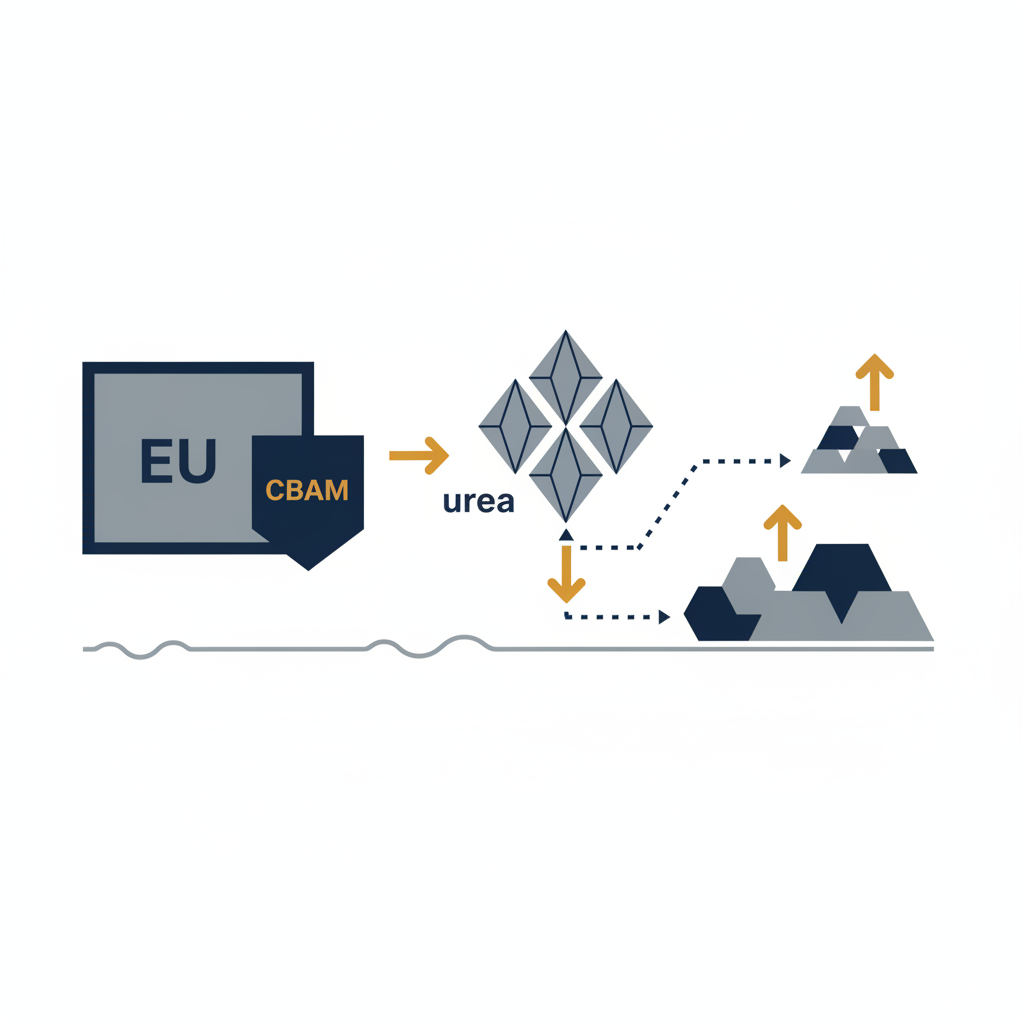
International fertilizer traders face substantial uncertainty regarding commercial terms and cost distribution as the European Union approaches the rollout of its Carbon Border Adjustment Mechanism (CBAM). Market participants remain divided over which Incoterms will offer the highest liquidity and how additional carbon expenditures will be allocated between exporters and buyers. The European Commission has yet to finalize key elements of the levy calculation, which incorporates fluctuating prices from the EU Emissions Trading System. This regulatory ambiguity complicates forward risk management across the global nitrogen supply chain.
Projected carbon levies vary significantly because the mechanism evaluates emissions intensity on an individual production facility basis. Newer and more energy-efficient manufacturing units will incur lower levies, while older installations face steep penalties. Estimated financial liabilities range from approximately €15 ($17) per tonne to upwards of €80 per tonne depending on the origin and technology of the asset. Consequently, European importers are expected to adjust procurement strategies to prioritize volumes from lower-emission supply routes.
Supply routes from Egypt, the largest external supplier of urea to the bloc, face estimated average levies near €40 per tonne, though performance differs across individual domestic plants. In contrast, Central Asian exporters in Uzbekistan and Turkmenistan contend with higher projected charges due to older, less fuel-efficient production assets. Trading firms note that these efficiency gaps will alter global trade flows as European purchasers seek to minimize compliance overheads. The European Commission also recently deferred legislative proposals intended to refine the CBAM framework, prolonging administrative uncertainty for trading desks.
Anticipation of the incoming carbon charges prompted an import surge during late October and early November, pushing Egyptian granular urea prices above $500 per tonne fob. European buyers accelerated vessel clearances through customs to establish warehouse inventories ahead of the regulatory transition. The resulting pricing pressure in North Africa prompted buyers to secure more than 300,000 tonnes of product from alternative origins, including Nigeria, Oman, Malaysia, Qatar, and China. These alternative shipments were directed toward import terminals in Romania, Turkey, and the United Kingdom.
While European fertilizer manufacturers like Yara welcome the policy as a means to restore competitive parity against non-EU producers, domestic capacity remains insufficient to satisfy regional agricultural demand. The European market relies heavily on external supply, having imported more than 5 million tonnes of urea from primary non-EU origins such as Egypt, Algeria, and Russia in 2023. Under the regulatory timeline, importers must purchase certificates covering at least 80 percent of embedded carbon quarterly once the phase-in starts. As a result, market analysts expect elevated regulatory expenses to be largely integrated into downstream wholesale pricing.
Meridian Commodities Briefing
Market & Trade Briefing
A concise daily read on commodity, energy, fuel oil, bunkering and freight developments — written for traders, brokers, owners and operators.