
Alkagesta CEO urges shipping industry to act on spiralling transport costs
Writing for The Motorship, Alkagesta chief executive Orkhan Rustamov argues that record freight and canal transit costs are not an immovable fact of life — and that traders and shipowners must build agility and contingency into supply chains before governments do it for them.
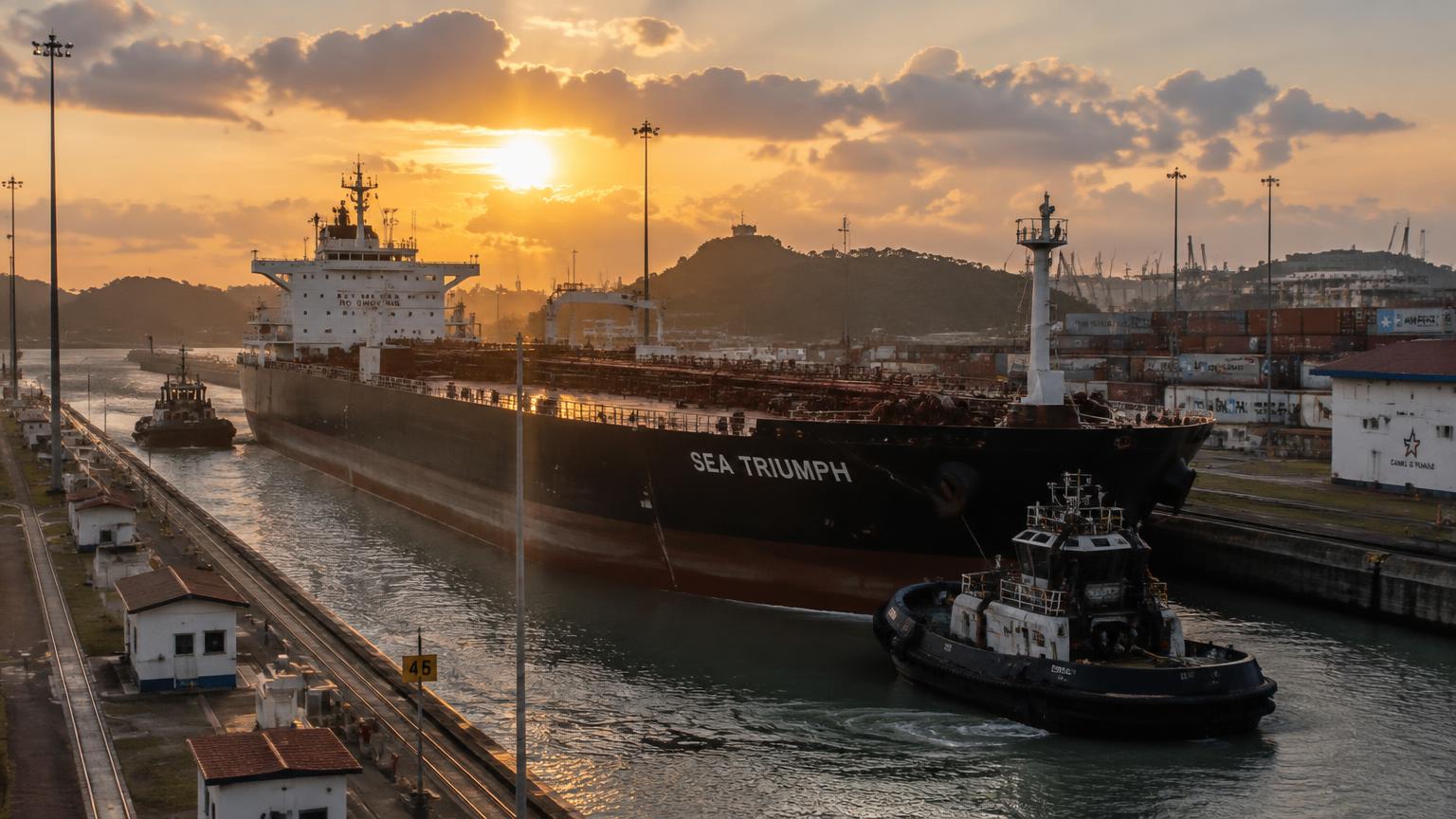
Record transport costs across the world's most important trade arteries should not be accepted as the new normal, according to Orkhan Rustamov, chief executive of Malta-headquartered trading house Alkagesta, in an exclusive opinion piece published by The Motorship. His argument is blunt: the industry that moves the world's essential resources has a responsibility to prevent the worst effects of the current price spiral, rather than blaming geopolitics and weather.
The numbers behind the argument are striking. Since the commodities publisher Argus began tracking key shipping prices in 2005, several benchmarks have just broken records for the first time — a fee of up to US$2.5m to pass through both locks of the Panama Canal, Black Sea tanker freight rates, and the cost of shipping oil from the Gulf to the Far East. Drought across Europe has pushed Trans-Rhine freight costs to their highest level in 14 years.
Rustamov acknowledges the headwinds. The on-off conflict in Hormuz has left one of the world's most vital trade routes persistently uncertain, and a worsening climate is disrupting inland waterways as well as ocean routes. But treating those pressures as a fait accompli, he writes, would be a fatal mistake: neither factor is going away, and the instability that ever-rising prices create invites scrutiny and intervention from governments and international bodies already under pressure to act.
Agility is his watchword. Shipping companies, he argues, must be embedded with traders to develop physical trading strategies that can react quickly to sudden events, instead of treating vessels, route choice and freight as separate line items in a narrow procurement exercise. That is the case Alkagesta's leadership has made consistently as a physical trader working across Malta, Singapore, Turkey and Romania, where blending cargo sourcing with logistics decisions is routine rather than exceptional.
Diversity of options — sources of supply, modes of transport and route selection — should be a basic requirement rather than a nice-to-have, Rustamov says. Traders bring the network and global reach to shift quickly when volatility hits, which is why closer collaboration between owners and commodity trading desks is presented as the practical answer rather than a commercial pitch.
The piece also calls for disciplined scenario planning and risk management. Few assumptions can safely be made about any part of the supply chain: refineries and ports can be out of action at a moment's notice, as 2026 has repeatedly shown. Operators should already know what they would do if a key node went down for a month, and whether road or pipeline alternatives are viable. The fallback does not have to be perfect or cheapest — it only has to work.
His closing warning is about focus. The industry has become too fixated on the live price, he writes, when 2026 — like 2022 — is a wake-up call to invest time, money and resources in the bigger supply chain picture. More than half a year into the Hormuz conflict, there has been ample time to start building resilient, diversified networks. Failure to do so, Rustamov concludes, would threaten the industry's standing as custodian of the resources that power the global economy. More on the company's trading and logistics approach is available at Alkagesta's shipping and logistics operation.
Meridian Commodities Briefing
Market & Trade Briefing
A concise daily read on commodity, energy, fuel oil, bunkering and freight developments — written for traders, brokers, owners and operators.